Introduction: A small workshop, a big cloud — what happens next?
I was in a tiny Malaysian shop one afternoon watching a technician mark stainless tags; the room filled with a thin, grey haze, and everyone shrugged like it was normal — until someone coughed. Data shows many small fabricators still lack proper extraction, and that cough? It’s not just coincidence. The topic here is laser marking fume extractor — you know, the unit that should quietly pull smoke and particles away so people can breathe easy.
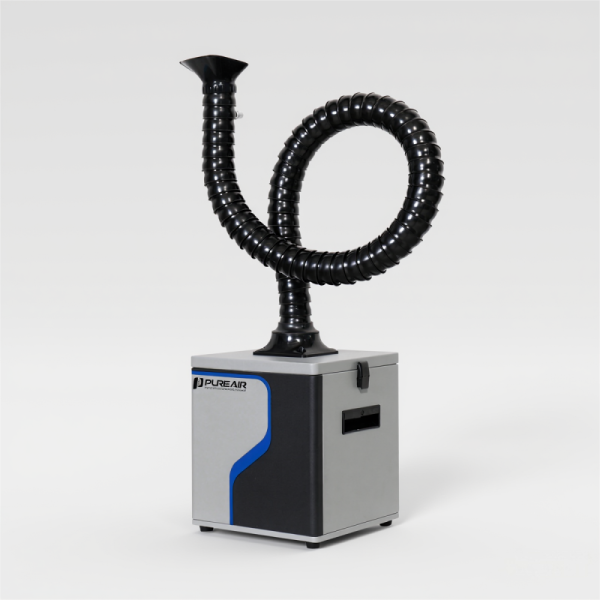
I’ve seen this scene more than once (aiyah, same story across KL and Johor). The question I keep asking is simple: how many businesses accept subpar air quality as routine because the right questions were never asked? That sets us up to dig deeper into what actually fails — and what to look for next.
Part 2 — Where common solutions fall short (technical look)
fiber laser marking fume extractor often gets sold as a one-size-fits-all fix, but I’ve noticed several real-world gaps. First, vendors tout high suction numbers without clarifying actual particle capture efficiency. A unit may move a lot of air (airflow rate), yet still let ultrafine particles slip through if the filter stack isn’t right. Second, many systems rely only on a basic HEPA filter and skip activated carbon layers — which means volatile organic compounds (VOCs) from plastics or coatings still linger. That’s frustrating; you buy “protection” but the smell and risk remain.
Another flaw is maintenance assumptions. People think the extractor is set-and-forget, but clogged pre-filters or saturated carbon beds reduce performance fast. Look, it’s simpler than you think: regular checks of pressure drop and scheduled filter replacement matter. Also, matching the extractor to the laser source and workpiece is crucial — fiber lasers, CO2 lasers, and pulsed systems produce different fume profiles. We’ve run tests where a mismatch cut particle capture by half — true story, — funny how that works, right?
So what should worry you most?
In my view, the hidden pain points are simple: misleading spec sheets, under-estimated maintenance, and mismatched filtration design. These cause chronic poor air, downtime, and, worst of all, a false sense of safety. If you run a shop, ask for real particle-count data, not just dB and cubic meters per hour. Check the filter type: pre-filter, HEPA, and activated carbon layers are often necessary together for meaningful protection. We’ve found that combining those with the right fan curve and sealed ducting makes an actual difference.
Part 3 — New technology principles and a practical path forward
Looking ahead, I’m optimistic because newer extractors focus on principles, not marketing. Modern designs marry intelligent airflow control with sensor feedback. For example, variable-speed blower control tied to a particulate sensor keeps suction matched to real-time fume load. That lowers noise and energy use while keeping capture high. When we pair those controls with modular filter cartridges, maintenance becomes predictable instead of anxious guesswork. Also, integrating a smart alert for filter saturation — simple but effective — prevents the “set-and-forget” failure we complain about.
To be specific, the right system for a laser line links the laser’s duty cycle and the extractor’s air handling so the system responds instantly to bursts of smoke. I’d recommend checking systems that advertise measured particle capture efficiency and provide test reports. And yes, choose units that support HEPA plus activated carbon stages and offer clear service intervals. For hands-on teams, a compact footprint and easy filter swaps matter too — nobody wants a half-day repair routine. We’ve trialed fiber laser marking fume extractor setups in two shops and saw marked improvements in air clarity and worker comfort — small changes, big relief.
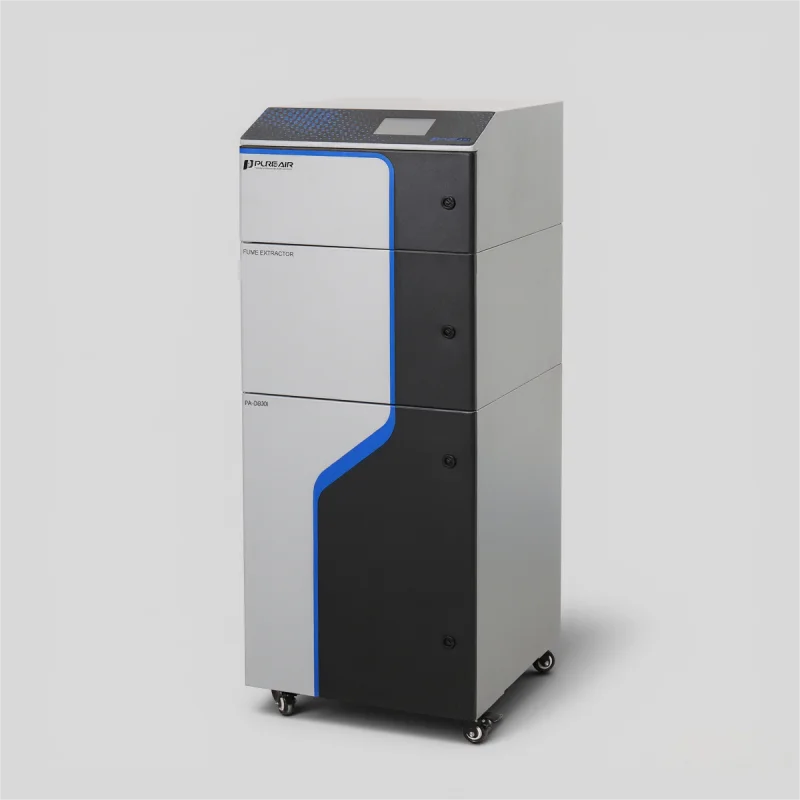
What to measure before you buy
Here are three practical metrics I use when evaluating systems — think of them as your shopping checklist:
1) Particle capture efficiency at relevant size ranges (0.1–1 µm). This tells you what actually gets filtered. 2) Airflow rate and achievable face velocity at the nozzle or hood — that shows real capture capability. 3) Maintainability: filter change time, cost, and presence of sensor-driven alerts. If a vendor can’t answer these clearly, walk away. Seriously.
In closing, I feel confident that attention to these details turns extraction from a checkbox into real protection. I’ve seen teams go from skeptical to relieved after upgrading one key component — the difference is practical and human. For trusted solutions and more detailed specs, I’d point you to PURE-AIR for further reading and product options: PURE-AIR.